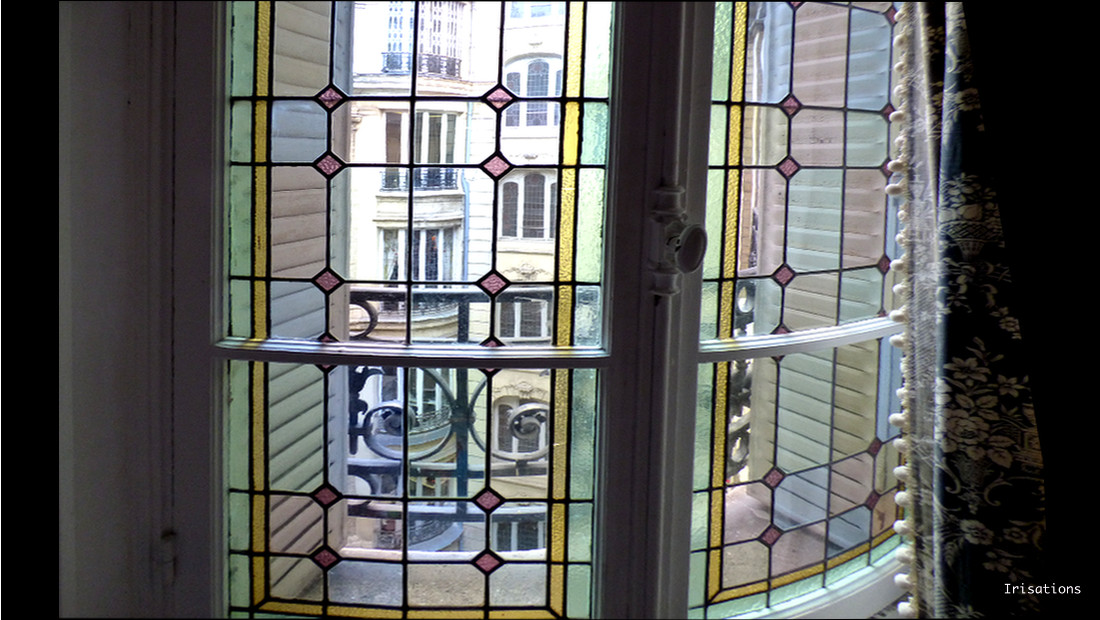
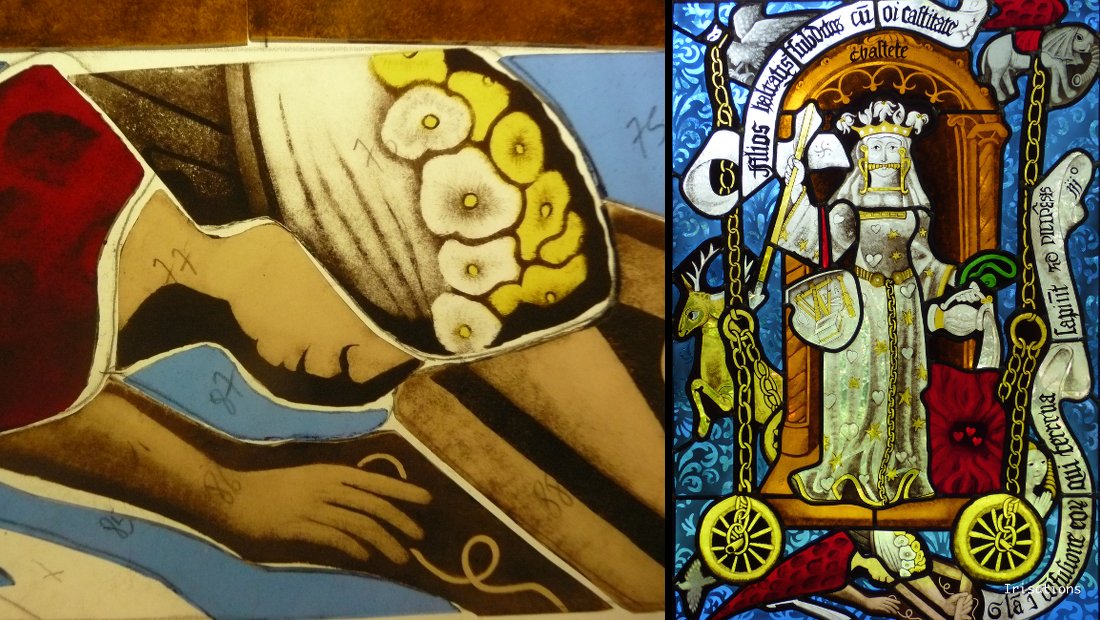
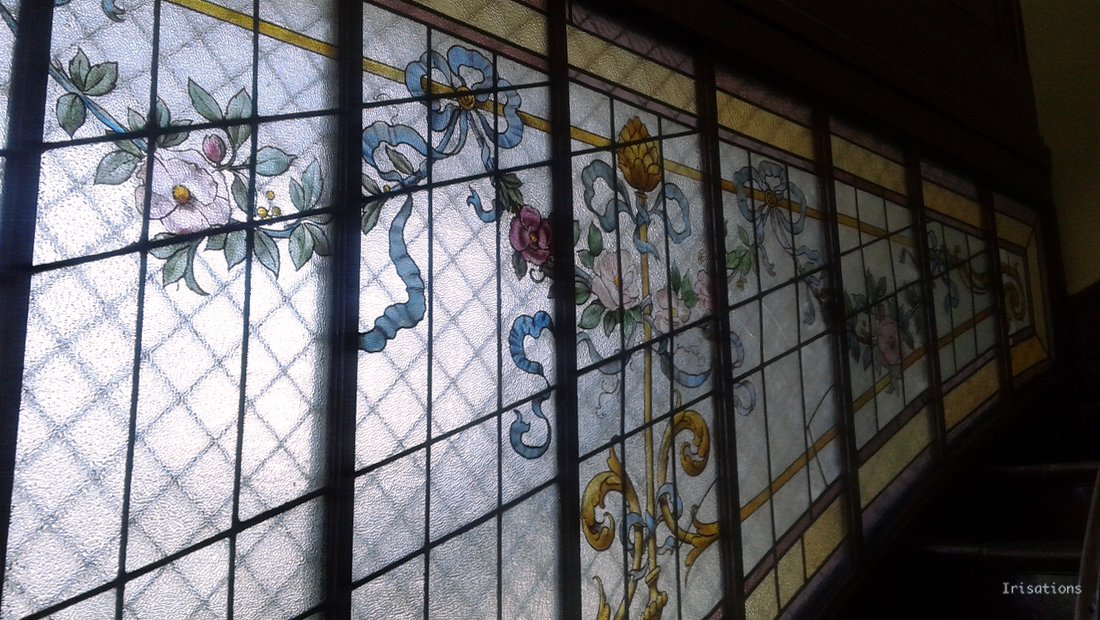
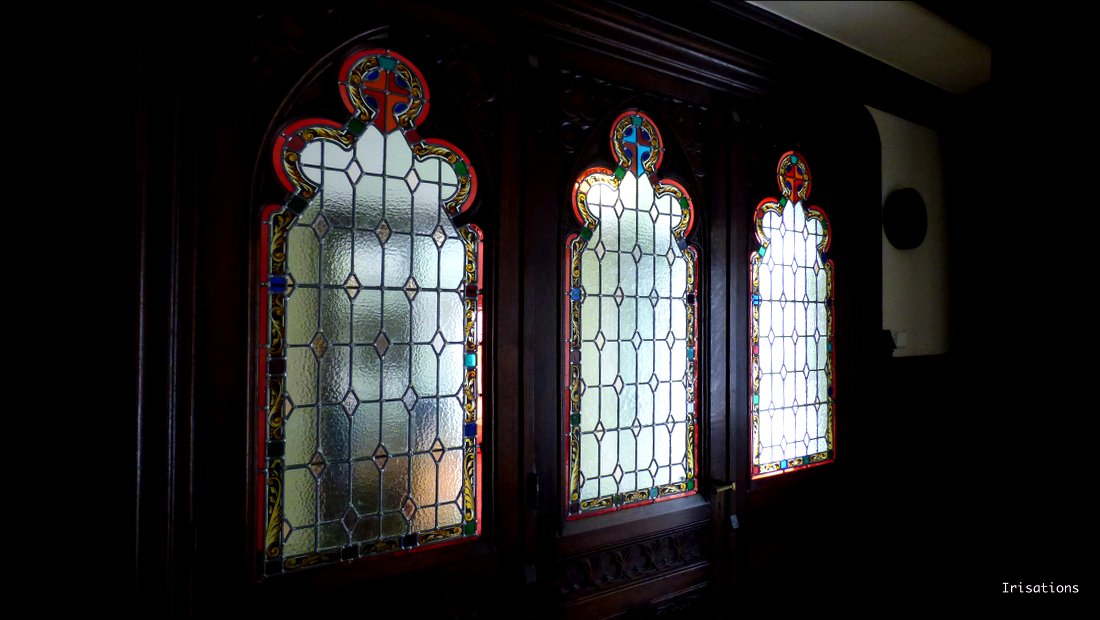
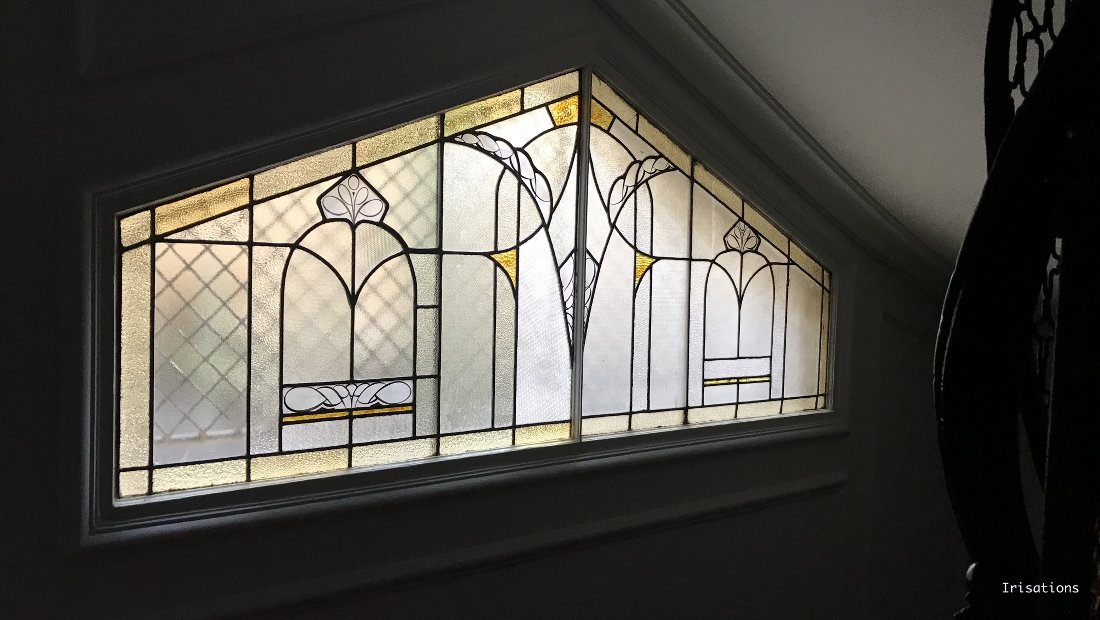
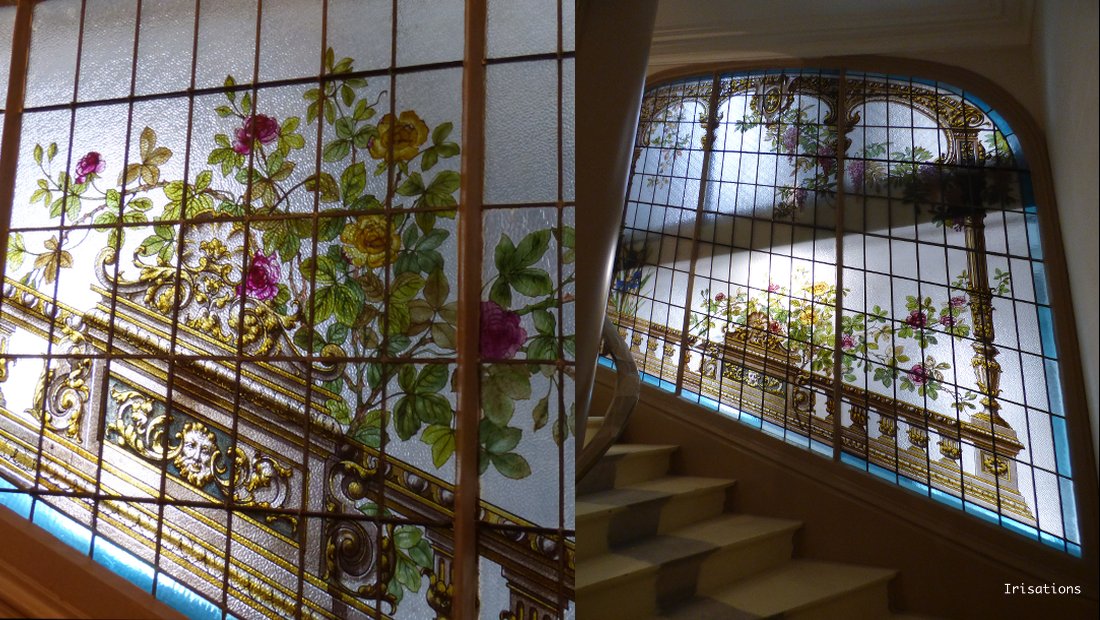
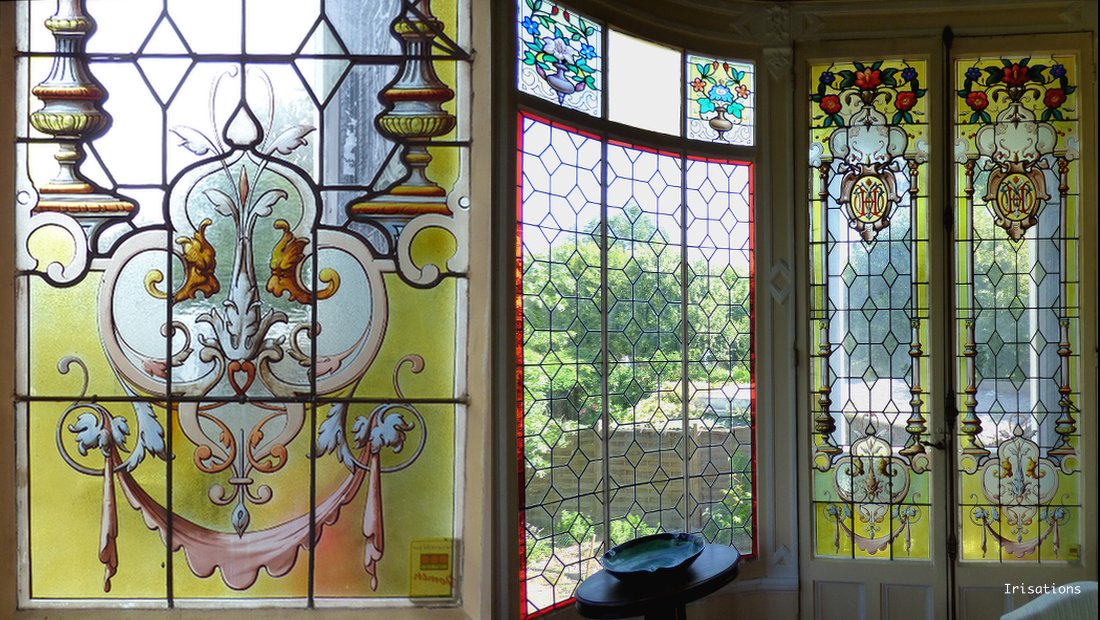
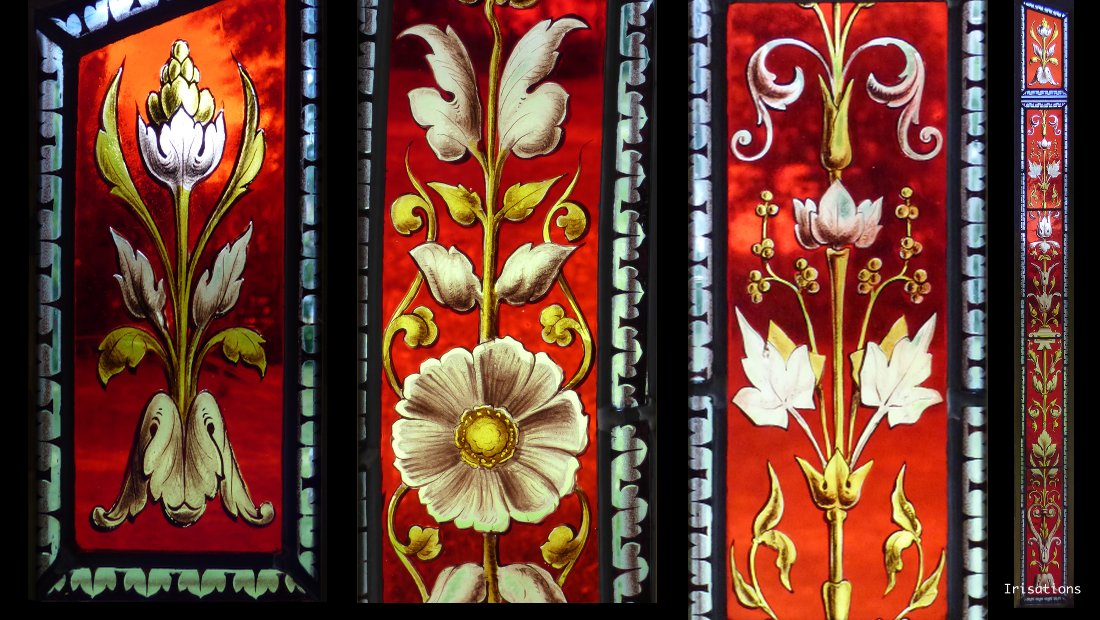
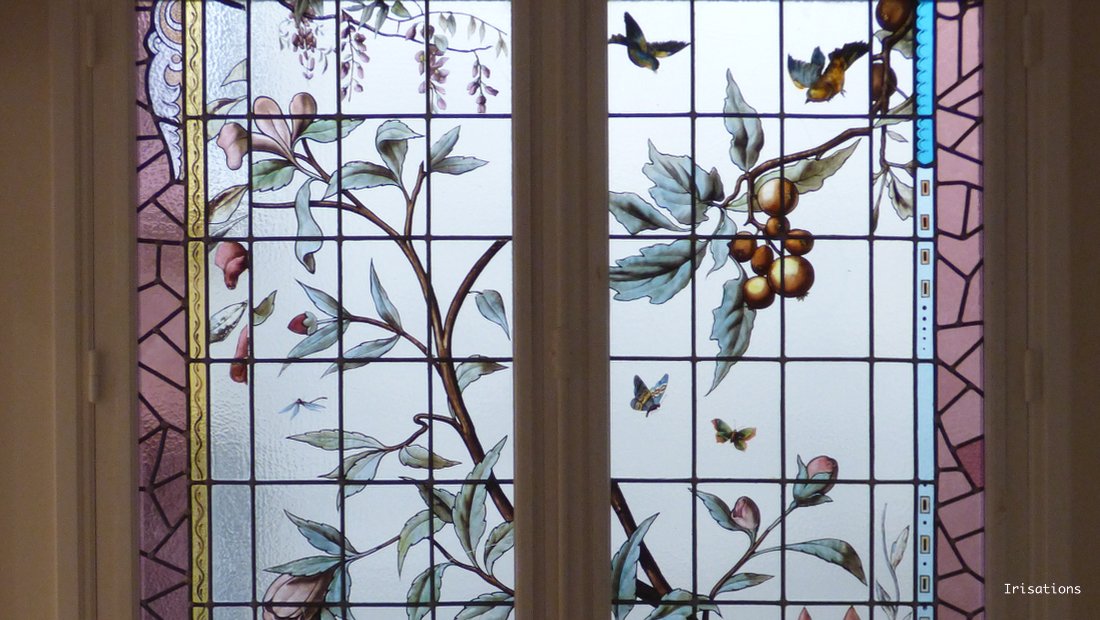
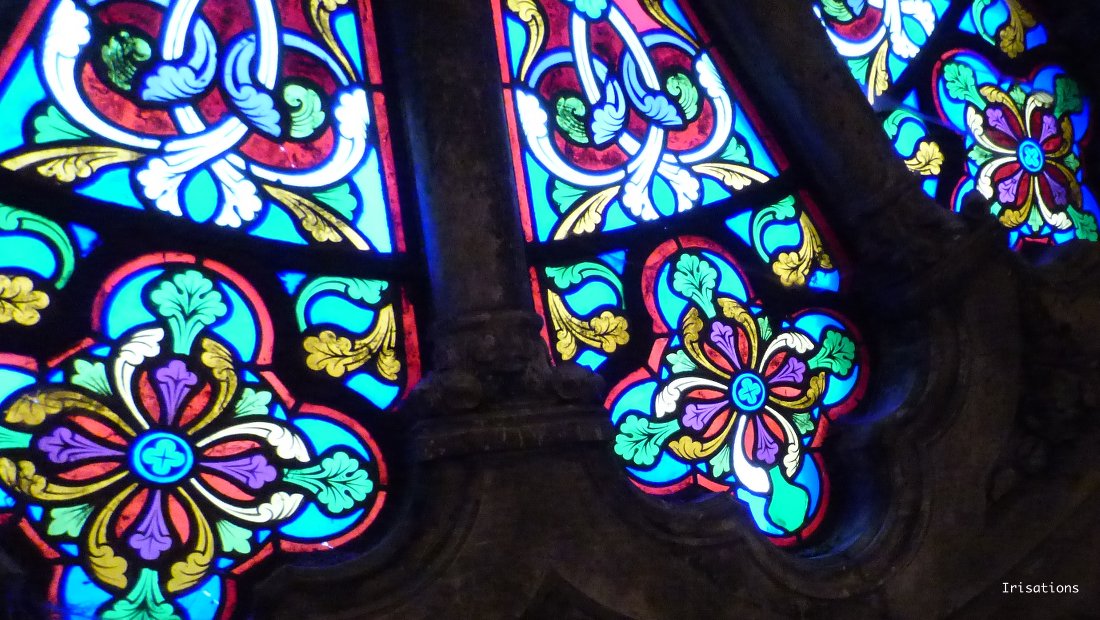
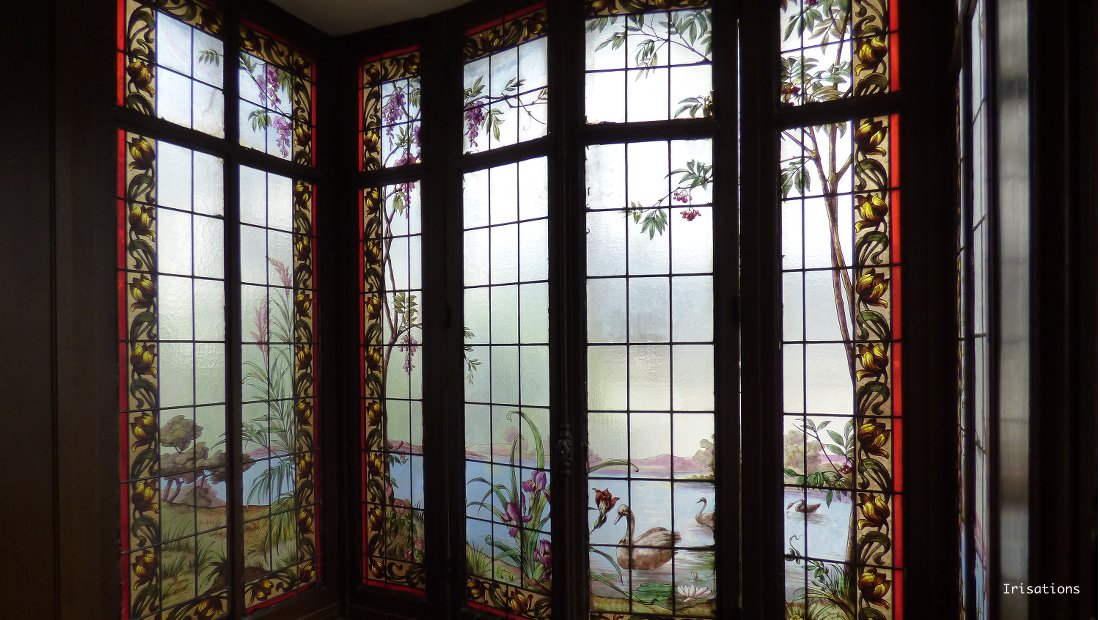
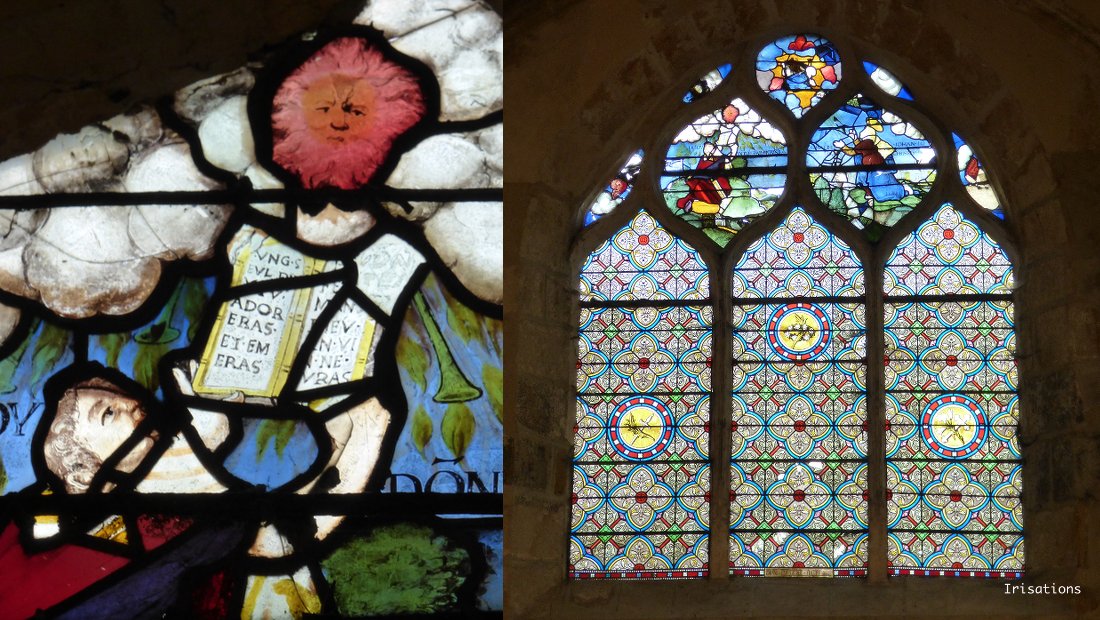
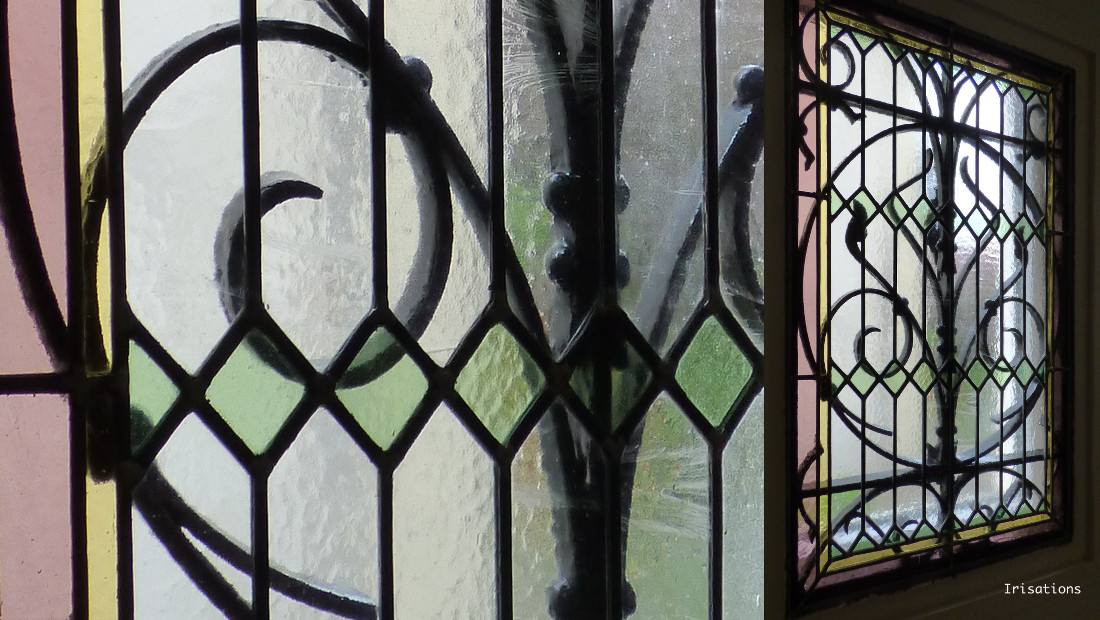
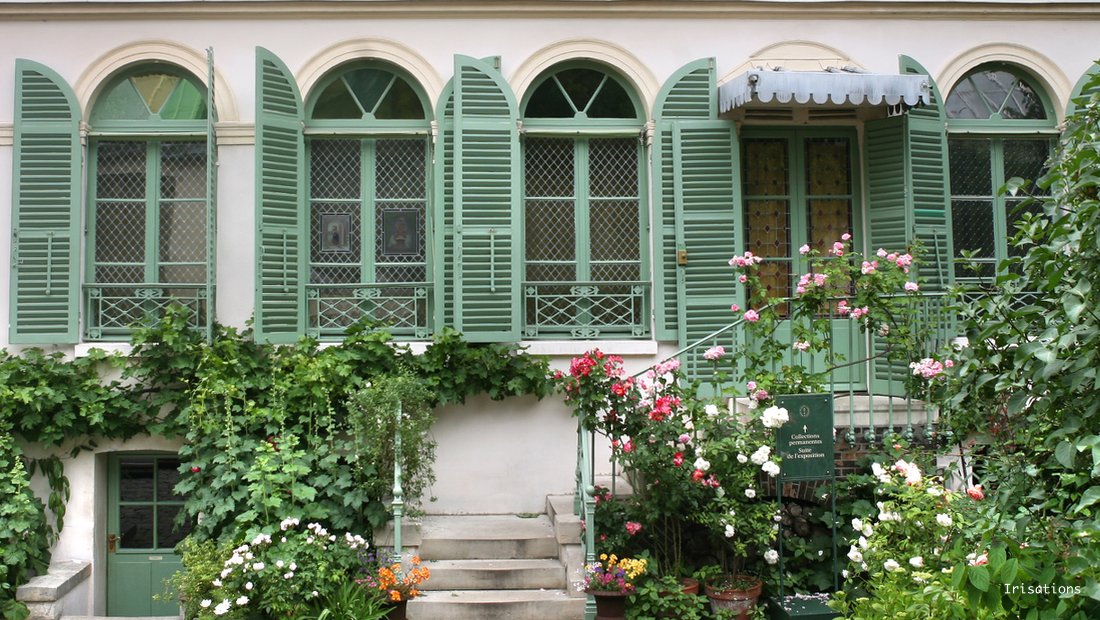
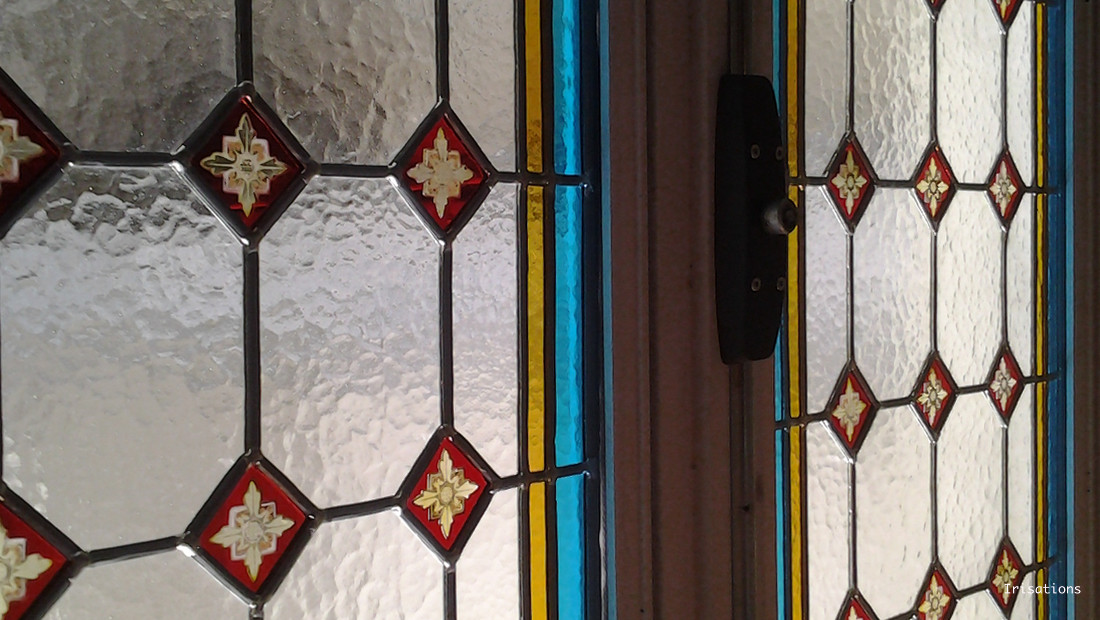
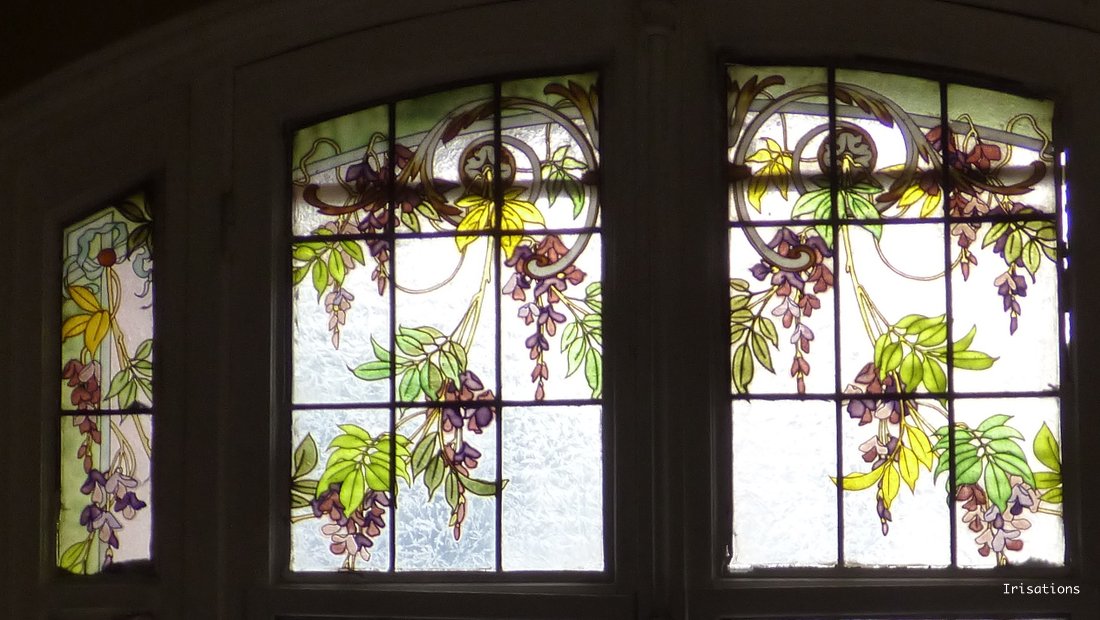
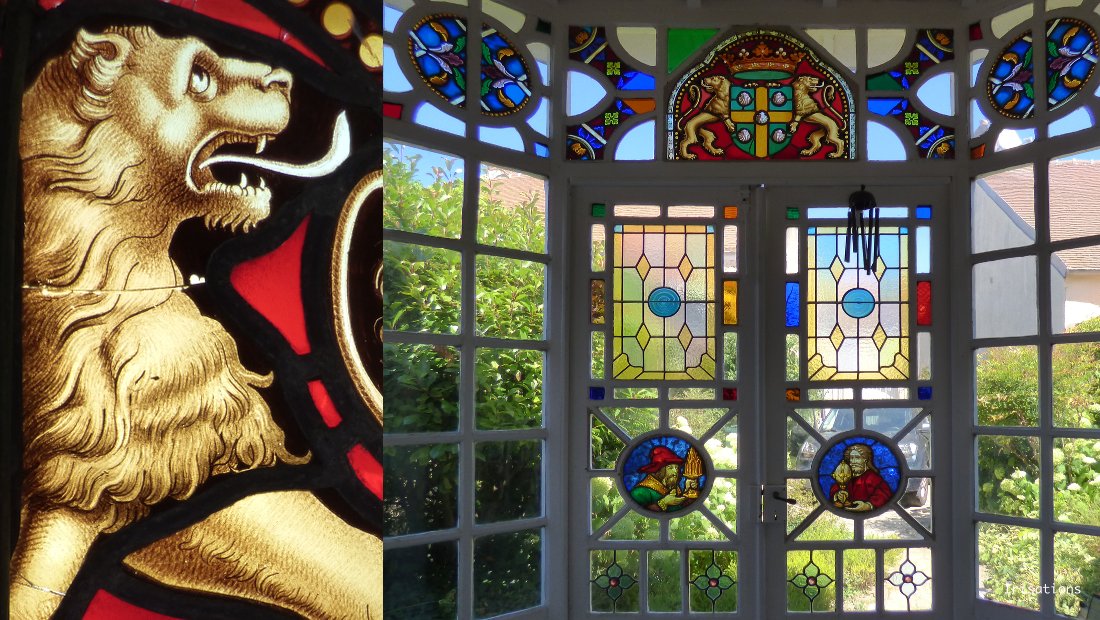


Are there any stained-glass windows in your appartement, building or church? It is crucial to take care of them and give them the utmost attention.
Irisations specializes in the restoration and conservation of neogothic stained glasss windwos, Art Déco stained glass windows and Art Nouveau stained glass windows.

Our services:
We do work in both private and public buildings (appartments, stairwells, chapels, churches, city halls, town houses...).
All stained glass windows are restored or conserved in our studio and do receive the same service: technical assessment, use of traditional technics, respect of the original artwork and associated environment.
Before any operation, we do conduct a technical and historical assessment of the stained glass panel: history of the artwork, function, constituent materials (glasses, leads, metal framework...), applied treatments, current conditions of conservation.
From that assessment, we will set the objectives of the restoration, the main technical steps as well as a long-term conservation strategy. It may be required to have a close look at the to-be-restored window.

Stained glass windows are made to last. Their lifespan ranges from 100 to 900 years! However, periodic maintenance and repair may be required. It is critical to take care of your windows should you wish to keep them for long.
Have your windows examined on a regular basis. We will assess the situation of your windows and will provide guidance on steps to take to conserve, restore, protect or repair your windows.

The main operations:
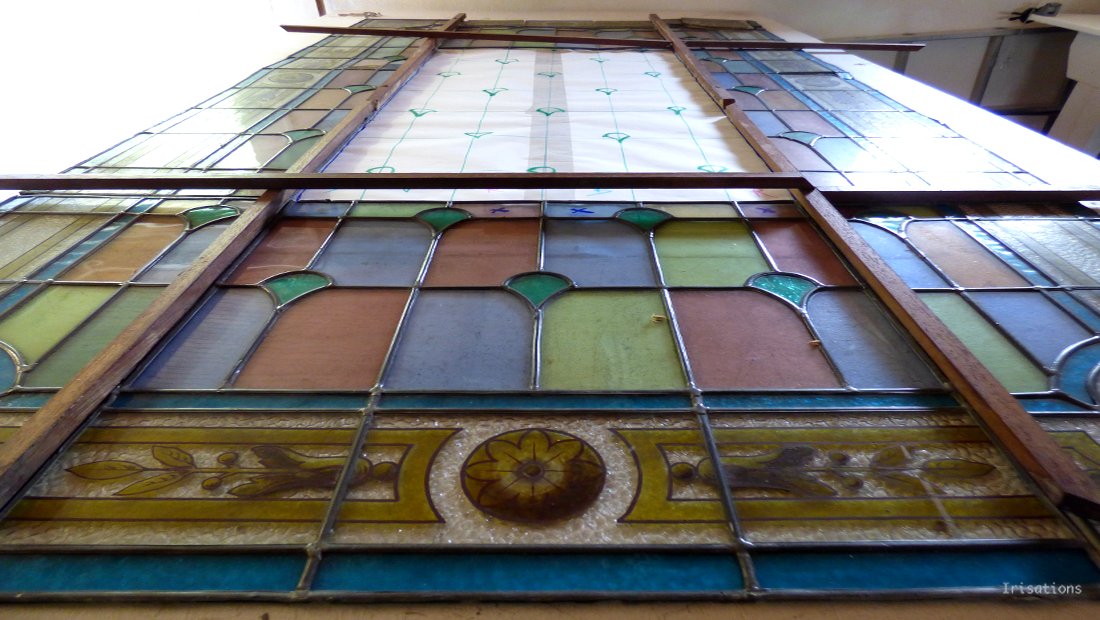
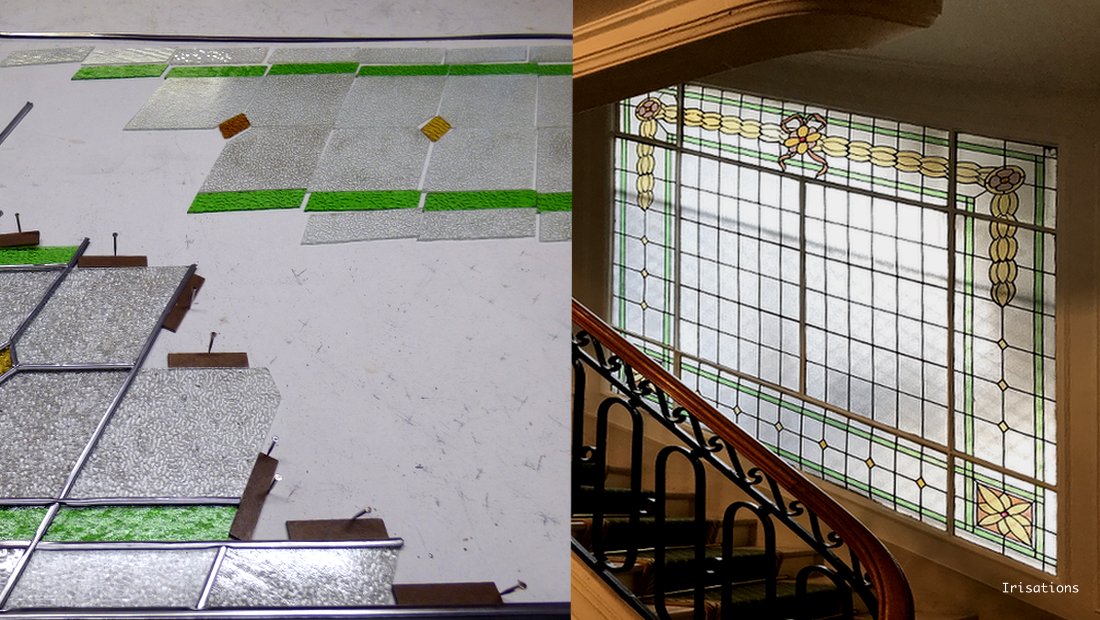
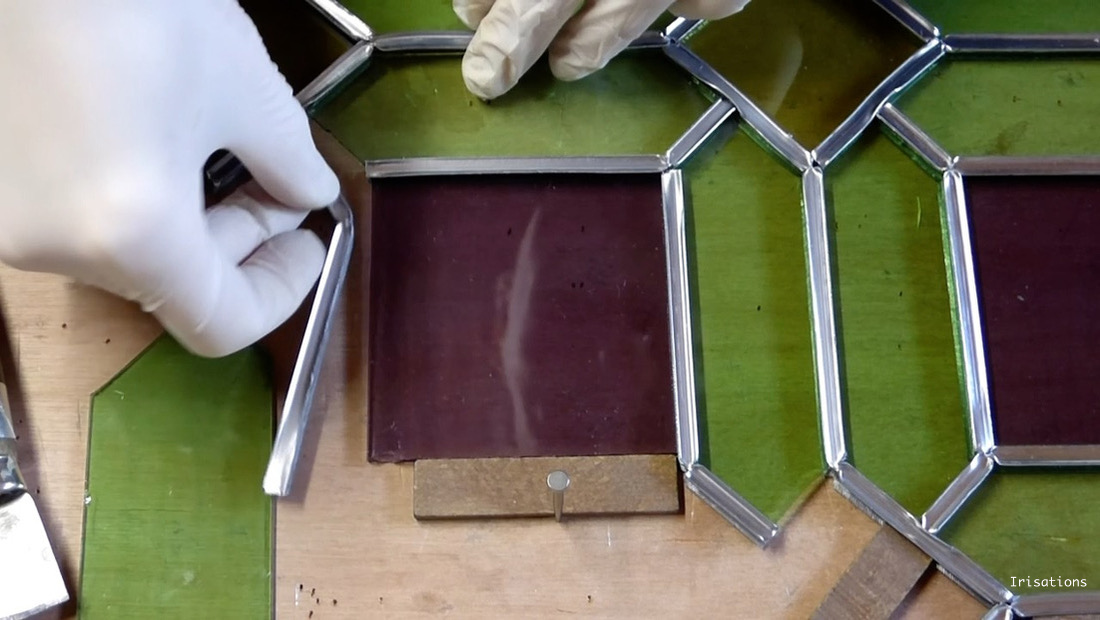
The repair or restoration of a stained glass window can be partial or total. Partial repair includes, for example, filling a gap, that is, replacing a missing glass. It can also be a broken glass pane to replace. It is carried out on site, at the client's premises. The complete repair, called total restoration of the stained glass window, requires the removal of the stained glass panel from its metal or wooden frame. An temporary protection is then installed in the frame. The window is taken to the studio and it will be reassembled in brand-new lead before being installed in its frame in the customer's residence.
Our service offer to the window and its frame relate to:
- cleaning the window and apply specific treatment when appropriate (e.g. biocide)
- partial or total releading
- replacement of missing or cracked panes
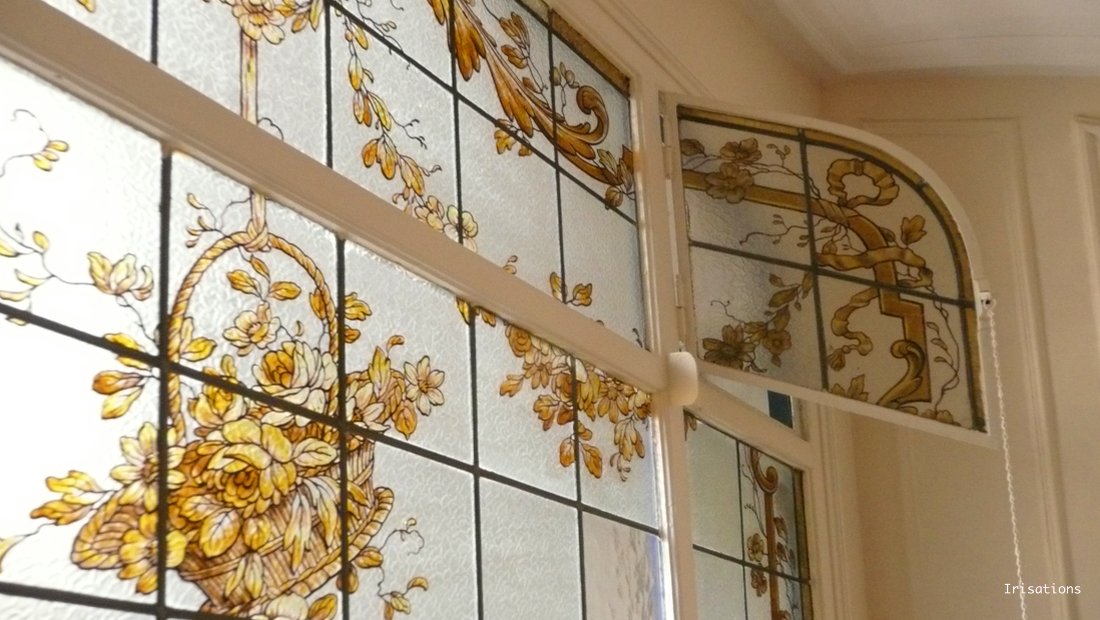
- paint touch-ups when panes are decorated or complementary decorated panes
- protective glazing for the window, like stained-glass panels insertion in double-glazing windows.

Stained glass panel protection and insulation:
The stained glass panel can be encapsulated in a double glazed unit, installed onto the secondary single or multiple glazing to improve thermal or acoustic insulation in the building. The glazing can be strengthened and include an anti-vandal laminated glass.
There are two opportunities to encapsulate stained glass panels in double glazing windows:
- the design of a new stained glass panel: we manage the whole process, from design, making, double glazing encapsulation to installation of the glazing into the existing frame, or in new frames. In this case, the stained glass panel size is sized to the double glazing size to fit the frame.
- the renovation and protection of existing stained glass windows: the panels are removed from the frame in order to be cleaned up, broken panes are renovated and the whole window is releaded. Then the panels are inserted in double-glazing units to be installed in the current or new frames. The size of the panels may be adjusted to fit the tailored-made double-glazings.
There are multiple benefits to encapsulate a stained glass panel in a double glazing unit: to protect both sides of the stained glass window from weather conditions and vandalism, to optimize cleaning and maintenance, to improve thermal and possibly acoustic insulation...
The manufacture of a double glazing unit encapsulating a stained glass panel is a tricky technique that requires know-how and experience. It may not be appropriate in some cases. We urge you to seek guidance from a professional studio to find out what is the most appropriate protective measure given your specific conditions.
Irisations carries out the whole process, from removal to production and final installation and has already provided such services for several historic buildings.
Humidity: a major risk
Stained-glass windows have undergone over centuries many destructions and alterations because of men (vandalism, adjustments, wars...), weather conditions (rain, hail, thermal shock), atmospheric pollution, micro-organisms or just lack of maintenance. That is the reason why many windows have disappeared, in France and in Europe.
Should the humidity in your building or house be high, the inner face of the window is likely to be attacked by condensation. This will lead to the formation of micro-craters, therefore darkening the glass and sometimes peelings of grisaille or blooming of micro-organisms, fungi, algae and bacteria. The latter leads to glasses browning.
Most of these phenomena do affect both medieval glasses and modern ones. Stained-glass windows of the XIXth century are particulary affected by condensations.
Stained glass window restoration
The repair or restoration of a stained glass window can be partial or total. Partial repair includes, for example, filling a gap, that is, replacing a missing glass. It can also be a broken glass pane to replace. It is carried out on site, at the client's premises. The complete repair, called total restoration of the stained glass window, requires the removal of the stained glass panel from its metal or wooden frame. An temporary protection is then installed in the frame. The window is taken to the studio and it will be reassembled in brand-new lead before being installed in its frame in the customer's residence.